Closing costs in Palm Beach County usually run about 2% to 5% of the price for a buyer, and the seller pays a share too. By local custom, the seller pays the deed tax and the owner’s title insurance policy and chooses the closing agent. The buyer pays the taxes on the mortgage, the lender’s fees and the prepaid items.
This guide walks through each cost, who normally pays it here, and what the numbers look like on a sample $500,000 home with a $400,000 loan. Your own figures will come from your contract, your lender and your closing agent, so treat this as a map, not a quote.
Key takeaways
- Florida charges documentary stamp tax of $0.70 per $100 on the deed. In Palm Beach County the seller usually pays it.
- Buyers who finance pay $0.35 per $100 in stamp tax on the loan plus a 2 mill (0.2%) intangible tax on the mortgage.
- Title insurance premiums are set by the state, so every title company charges the same premium for the same policy.
- The seller usually picks the closing agent and pays for the owner’s title policy in Palm Beach County, but the contract decides.
- Property taxes are paid in arrears in Florida, so the seller credits the buyer for the part of the year the seller owned the home.
What are closing costs in Palm Beach County?
Closing costs in Palm Beach County are the taxes, title charges, lender fees, recording fees and prepaid items paid when a home changes hands. They are separate from the down payment and the price. Some are set by Florida law, such as documentary stamp tax and title insurance premiums, and others vary by lender, title company and association.
It helps to sort them into four groups:
- Government taxes and fees. Documentary stamp tax on the deed and the loan, the intangible tax on the mortgage, and the Clerk’s recording fees.
- Title and closing charges. The owner’s and lender’s title insurance policies, the title search, the closing or settlement fee, and any endorsements.
- Lender charges. Origination or underwriting fees, the appraisal, the credit report, and any points you choose to pay.
- Prepaids and prorations. Homeowners and flood insurance for the first year, money set aside in an escrow account, interest from closing to the end of the month, and your share of property taxes and association dues.
Every one of these shows up on the Closing Disclosure your lender must send before closing, and on the settlement statement the closing agent prepares. Cash buyers skip the lender charges and the loan taxes, which is why their costs sit at the low end of the range.
Who pays closing costs in Palm Beach County, the buyer or the seller?
In Palm Beach County, both sides pay closing costs, and the purchase contract sets the split. Under the most common option in the Florida Realtors and Florida Bar contract, the seller chooses the closing agent and pays for the owner’s title policy, title search and closing services. The seller also pays the deed stamps. The buyer pays the loan-related costs.
The standard Florida Realtors and Florida Bar residential contract gives three choices in its closing cost paragraph. The first option, where the seller designates the closing agent and pays for the owner’s policy, is the one most of Florida uses, including Palm Beach County. The second puts that cost and choice on the buyer, which is the custom in a few other counties. The third is a regional option written for Miami-Dade and Broward.
Custom is a starting point, not a rule. Buyers and sellers can agree to anything in writing. In a busy market a buyer might offer to cover more costs to make an offer stronger. In a slower market a seller might give a credit toward the buyer’s costs. If you are selling, your agent should explain each box on the contract before you sign. If you are buying, ask the same questions. Our buyer’s guide and seller’s guide cover how these choices fit into the bigger picture.
| Cost | Usual payer in Palm Beach County | How it is set |
|---|---|---|
| Doc stamps on the deed ($0.70 per $100) | Seller | Florida law (F.S. 201.02) |
| Owner’s title insurance policy | Seller | State-promulgated rates |
| Title search and closing fee (seller’s side) | Seller | Title company |
| Doc stamps on the note or mortgage ($0.35 per $100) | Buyer | Florida law (F.S. 201.08) |
| Intangible tax on the mortgage (2 mills) | Buyer | Florida law (F.S. 199.133) |
| Lender’s title policy and endorsements | Buyer | State rates plus endorsement charges |
| Lender fees, appraisal, credit report | Buyer | Lender |
| Prepaid insurance, escrow deposits, interest | Buyer | Lender and insurer |
| Property tax and HOA proration | Shared by days owned | Contract |
| HOA or condo estoppel certificate | Set by the contract | Florida law caps the fee |
Selling soon? Get a free valuation with an estimate of what you would net after closing costs.
How much is the documentary stamp tax on a home sale in Florida?
Documentary stamp tax on a Florida deed is $0.70 for every $100 of the price, or part of $100. On a $500,000 sale that is $3,500. The Florida Department of Revenue applies this rate in every county except Miami-Dade, which has its own rate and surtax. In Palm Beach County the seller usually pays it.
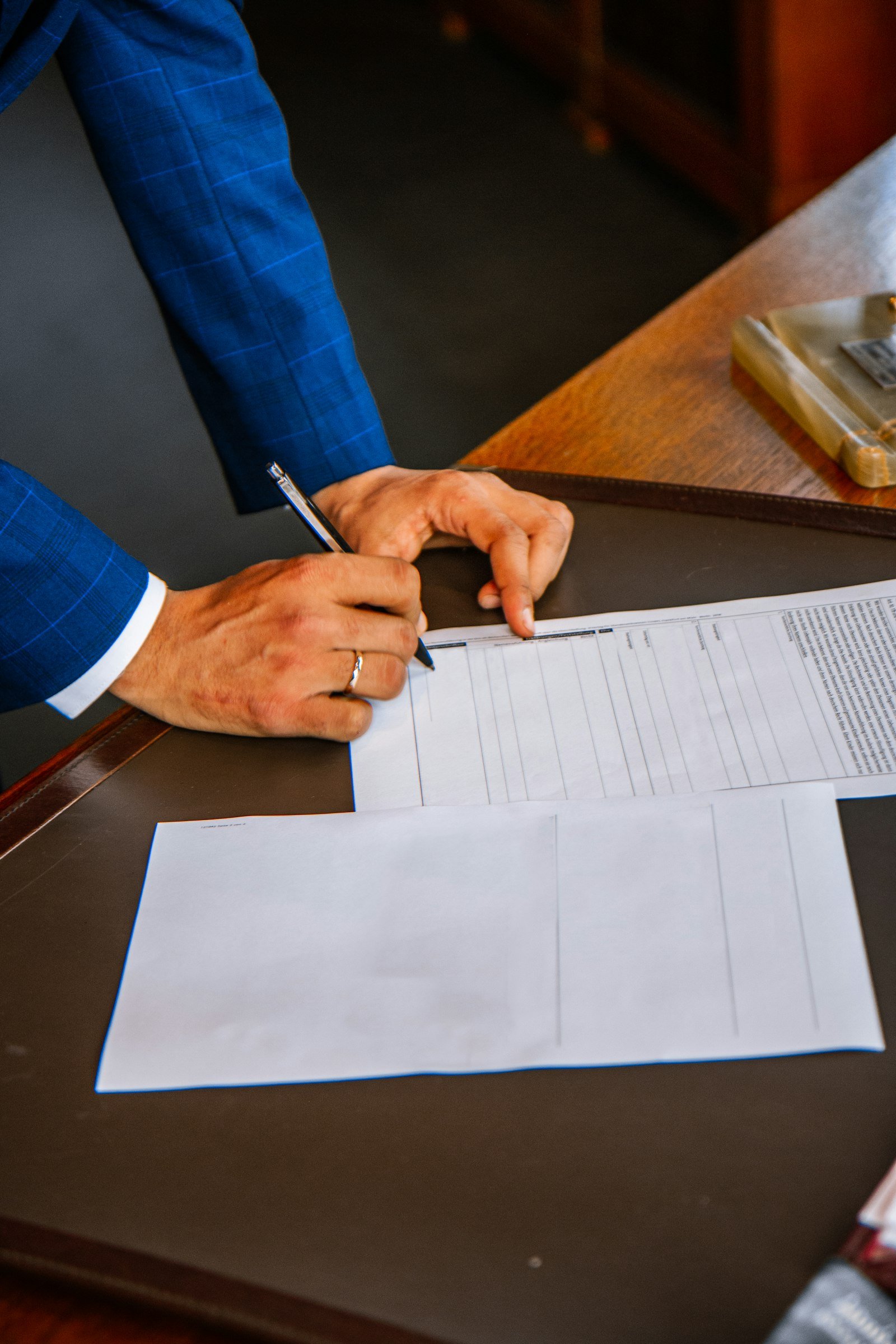
The tax comes from section 201.02 of the Florida Statutes. The Department of Revenue notes that all parties to the deed are legally liable for the tax, whatever the contract says, so the closing agent collects it at closing and pays it when the deed is recorded. You will see it on the settlement statement as “deed stamps” or “documentary stamp tax on deed.”
Because the rate is a flat percentage, it is easy to estimate: move the decimal two places to the left on the price, then multiply by 0.70. A $750,000 sale works out to $5,250. A $1,200,000 sale works out to $8,400.
What taxes does a buyer pay on a mortgage in Florida?
A Florida buyer who takes out a mortgage pays two state taxes on the loan. Documentary stamp tax on the note is $0.35 per $100 of the amount borrowed, and the nonrecurring intangible tax is 2 mills, or $2 per $1,000. On a $400,000 loan those two taxes come to $1,400 and $800, for $2,200 in total.
The stamp tax on notes and mortgages is in section 201.08 of the Florida Statutes, and the intangible tax is in section 199.133. Neither applies to a cash purchase, which is one reason cash buyers pay less at closing.
These taxes are paid at closing and appear on your Loan Estimate and Closing Disclosure. They are a fixed share of the loan amount, so a larger down payment lowers them. If you are comparing loan offers, these taxes will be the same from every lender, since the state sets them. The lender fees are where offers differ.
How much does title insurance cost in Palm Beach County?
Title insurance in Palm Beach County costs the same premium everywhere, because Florida sets the rates. The owner’s policy is $5.75 per $1,000 of the price up to $100,000 and $5.00 per $1,000 from $100,000 to $1 million. On a $500,000 home the owner’s premium is $2,575. A lender’s policy bought at the same time has a $25 minimum.
Section 627.782 of the Florida Statutes requires the state to adopt a rule setting the premiums title insurers charge, and that rule is Florida Administrative Code 69O-186.003. The full schedule for an owner’s policy reads:
- Up to $100,000 of coverage: $5.75 per $1,000
- $100,000 to $1 million: $5.00 per $1,000
- $1 million to $5 million: $2.50 per $1,000
- $5 million to $10 million: $2.25 per $1,000
- Over $10 million: $2.00 per $1,000
- Minimum premium: $100
When the lender’s policy is issued at the same time as the owner’s policy, it is called a simultaneous issue, and it carries a minimum charge of $25 for coverage up to the owner’s policy amount. That is why buyers in Palm Beach County, where the seller pays for the owner’s policy, often see a small charge for the lender’s policy plus the cost of endorsements the lender requires.
The premium is fixed, but other title charges are not. The title search, closing fee and other service fees vary by company, so it is fair to ask for a written quote. Reissue rates, a discount when the seller has a prior owner’s policy, can also apply in some cases. Ask the title agent whether you qualify.
Why title insurance matters
The owner’s policy protects you against covered problems with the title that existed before you bought, such as an old lien or a forged signature in the chain of ownership. You pay once, at closing, and coverage lasts as long as you or your heirs own the home. The lender’s policy protects only the lender.
What does a closing cost estimate look like on a $500,000 home?
On a sample $500,000 Palm Beach County home with a $400,000 mortgage, the seller’s state-set costs are about $6,075: $3,500 in deed stamps and $2,575 for the owner’s title premium. The buyer’s state-set costs are about $2,225: $1,400 in loan stamps, $800 in intangible tax and a $25 simultaneous lender’s policy. Lender fees, prepaids and prorations come on top.
Here is the same example in a table. These are example numbers, worked from the state rates above. They leave out costs that vary from deal to deal, such as commissions, lender fees, title search and closing fees, endorsements, insurance and escrow deposits.
| Example item ($500,000 price, $400,000 loan) | Seller | Buyer |
|---|---|---|
| Doc stamps on deed: $500,000 ÷ 100 × $0.70 | $3,500 | |
| Owner’s title premium: $100,000 at $5.75 + $400,000 at $5.00 per $1,000 | $2,575 | |
| Doc stamps on note: $400,000 ÷ 100 × $0.35 | $1,400 | |
| Intangible tax: $400,000 × 0.002 | $800 | |
| Simultaneous lender’s title policy (minimum) | $25 | |
| State-set subtotal | $6,075 | $2,225 |
For the buyer, the full picture is bigger. A 2024 Redfin estimate puts buyer closing costs at between 2% and 5% of the price, which on a $500,000 home is $10,000 to $25,000. Most of the difference comes from lender fees, any points, the first year of homeowners and flood insurance, and the escrow deposit for taxes and insurance.
For the seller, the biggest items are usually the mortgage payoff, real estate commissions, any repair credits agreed after the inspection, and the property tax proration covered below. If you want to see your own net sheet, a free home valuation is a good first step.
How are property taxes handled at closing in Palm Beach County?
Property taxes in Palm Beach County are paid in arrears, on a bill mailed by November 1. Because the seller has not yet paid for the months they owned the home in the year of sale, the seller gives the buyer a credit at closing for those days. The buyer then pays the full bill when it arrives.
The Palm Beach County Tax Collector mails bills by November 1. Paying early earns a discount:
| When you pay | Discount |
|---|---|
| November | 4% |
| December | 3% |
| January | 2% |
| February | 1% |
| By March 31 | Full amount due |
| April 1 | Taxes become delinquent |
If the current year’s bill is not out yet, the closing agent usually prorates using the prior year’s bill as an estimate. As an example, if last year’s taxes were $9,000 and the seller owned the home for 181 days of the year of sale, the seller’s credit to the buyer would be about $4,463. Your contract states exactly how the proration is figured, so ask your closing agent to walk you through it.
Buyers should also plan for a change in the bill itself. The new owner’s assessment resets to market value on January 1 after the purchase, and the seller’s exemptions do not transfer. Our homestead exemption guide explains how to file and how the Save Our Homes cap starts over.
What other fees show up on a Palm Beach County closing statement?
Other common Palm Beach County closing fees include Clerk recording fees, HOA or condo estoppel certificates, association transfer or application fees, the lender’s appraisal and underwriting fees, survey and inspection costs, and prepaid insurance. Recording costs $10 for the first page and $8.50 for each additional page, and Florida law caps estoppel fees.
Recording fees
The Palm Beach County Clerk records the deed and the mortgage so the public record shows the new owner and lender. At $10 for the first page and $8.50 for each page after that, a 3-page deed costs $27 and a 12-page mortgage costs $103.50 to record. These are small items, but they are real.
Estoppel certificates
If the home is in a homeowners association or a condo, the closing agent orders an estoppel certificate, which states what the owner owes the association. Florida law (sections 720.30851 and 718.116) caps the fee. The statute set it at $250 for a current account, plus $100 for delivery within 3 business days and up to $150 more if the account is delinquent. The caps are adjusted for inflation every 5 years, and after the 2022 adjustment they are $299, $119 and $179. The next adjustment is due in 2027. The association must deliver within 10 business days. Your contract says who pays.
Association and lender items
Many communities also charge a transfer, application or capital contribution fee, which can be large in some gated and condo communities. Read the association documents early. Lenders charge for the appraisal, credit report and underwriting, and the buyer usually pays for the home inspection, any wind mitigation or 4-point inspection, and a survey if the lender or title company wants one. Our guide to 4-point and wind mitigation inspections explains why those reports can lower your insurance bill.
Insurance and escrow
Expect to pay the first year of homeowners insurance before closing, and flood insurance if the lender requires it or you choose it. Lenders also collect a cushion for the escrow account that pays future tax and insurance bills. If you are buying near the water, check the flood zone early with our flood zone guide.
How can buyers and sellers lower closing costs?
Buyers and sellers can lower closing costs in Palm Beach County by negotiating credits in the contract, comparing lender fees, asking about title reissue rates and reading association fees before making an offer. State-set items such as doc stamps and title premiums cannot be shopped, but almost everything else can.
- Compare at least two Loan Estimates. The loan taxes are the same everywhere, so compare origination fees, points and the interest rate.
- Ask for seller credits. A buyer can ask the seller to pay part of the closing costs, within the limits the loan program allows.
- Ask about a reissue rate. If the seller has a prior owner’s title policy, a lower reissue rate may apply.
- Get insurance quotes early. Insurance can be one of the largest buyer costs in Florida. Shop it during the inspection period, not the week of closing.
- Read the association documents. Transfer and capital contribution fees vary a lot between communities.
- Time the closing with care. Closing early in the month means more prepaid interest is due at closing but your first payment comes later. Ask your lender how the date changes your cash to close.
Buying in Palm Beach County? Search homes for sale and save the ones you like.
What mistakes do people make with closing costs?
Common closing cost mistakes in Palm Beach County include budgeting only for the down payment, forgetting the insurance and escrow deposit, assuming the seller’s tax bill will carry over, missing association fees in the documents, and waiting until the last week to read the Closing Disclosure. Each one can mean a surprise at the closing table or a delayed closing.
- Using the seller’s tax bill as your budget. The assessment resets after a sale, so your bill may be much higher.
- Skipping the flood zone check. A required flood policy can change your monthly payment and your cash to close.
- Not reading the contract’s closing cost options. The checkbox you pick decides who pays the owner’s policy and who chooses the closing agent.
- Wiring funds without calling to confirm. Always verify wiring instructions by phone with your closing agent, using a number you already know. Wire fraud is a real risk in real estate.
Sellers should also be ready for the buyer’s lender and title company to need documents quickly, such as payoff letters and association contacts. A smooth file closes on time. If you are just starting, our step-by-step guide to selling a home in Palm Beach County shows where closing fits in the process.
Frequently asked questions
Does the seller pay title insurance in Palm Beach County?
Usually, yes. In Palm Beach County the common custom is that the seller chooses the closing agent and pays for the owner’s title insurance policy, title search and closing services. This follows the first option in the standard Florida Realtors and Florida Bar contract. Buyers and sellers can agree to a different split in writing.
How much are doc stamps on a $400,000 house in Florida?
Documentary stamp tax on the deed for a $400,000 house in Florida is $2,800, at $0.70 per $100. In Palm Beach County the seller usually pays it. If the buyer borrows money, there is also a separate stamp tax of $0.35 per $100 on the loan, plus a 2 mill intangible tax on the mortgage, which the buyer pays.
Are closing costs higher for cash buyers or financed buyers?
Financed buyers pay more. A cash buyer in Palm Beach County avoids the stamp tax on the note, the intangible tax on the mortgage, the lender’s title policy and all lender fees. A cash buyer still pays for recording, any inspections, insurance, and the share of property taxes and association dues from the closing date forward.
Can I get the seller to pay my closing costs?
Yes, if the seller agrees in the contract. Buyers often ask for a seller credit toward closing costs, and loan programs set a limit on how much a seller can contribute. Whether a seller agrees depends on the market, the price and the rest of your offer. Your agent can tell you what is realistic for a given home.
When do I get the final closing cost numbers?
Your lender must give you the Closing Disclosure at least three business days before closing. It lists the final loan terms and closing costs. The closing agent also prepares a settlement statement. Compare both with your Loan Estimate and ask about any line that changed. Cash buyers get the settlement statement from the closing agent.
Sources
- Florida Statutes 201.02, documentary stamp tax on deeds
- Florida Department of Revenue, Documentary Stamp Tax overview
- Florida Statutes 201.08, stamp tax on notes and mortgages
- Florida Statutes 199.133, nonrecurring intangible tax
- Florida Statutes 627.782, title insurance rates
- Florida Administrative Code 69O-186.003, title insurance premium rates
- Old Republic National Title (The Fund), contract closing cost options
- Palm Beach County Clerk, recording transmittal and fees
- Palm Beach County Tax Collector, property tax payment and discounts
- Shumaker: DBPR increases association estoppel certificate fees (2022)
- Florida Statutes 720.30851, HOA estoppel certificates
- Florida Statutes 718.116, condo estoppel certificates
- Redfin, buyer closing cost estimate (2024)
- Palm Beach County Property Appraiser, FAQ on reassessment after a sale
This article is general information, not legal, tax or insurance advice. Rules, rates and deadlines change, so confirm the details with the official source, a Florida real estate attorney, your title company, your insurance agent or a tax professional before you rely on them.
With over 10 years of experience as a successful real estate agent, I have proudly helped hundreds of happy buyers and sellers achieve their real estate goals. I’m passionate about helping clients find their dream homes, sell their properties with confidence, and navigate every step of the process with ease. My commitment to personalized service, strong relationships, and exceptional results makes every real estate journey a rewarding experience.
REALTOR® with Continental Properties, Inc. in North Palm Beach. Florida license #3346934.