Buying a condo in Palm Beach County still makes sense for many people, but the checks are different than they were a few years ago. Florida’s condo safety laws now require older buildings of three or more habitable stories to pass milestone inspections and fund full reserves for major repairs. Before you buy, you need to know where the building stands on both, because that is what drives the monthly fees and the risk of a special assessment.
The good news is that the same laws also give buyers far more information than before. If you know which documents to ask for and how long you have to read them, you can make a clear decision on any building.
Key takeaways
- Condo buildings of three or more habitable stories need a milestone inspection by December 31 of the year they turn 30, then every 10 years.
- Those buildings also need a structural integrity reserve study (SIRS), and owners can no longer vote to waive those reserves.
- On a resale, the seller must give you the condo documents, including the milestone summary and the SIRS, and you then have 7 days (not counting weekends and legal holidays) to cancel.
- Higher reserves usually mean higher monthly fees, and big repairs are often paid with a special assessment or a loan.
- Financing is not automatic. Very few South Florida condo buildings are FHA-approved, so talk to your lender about the building early.
Why did Florida change its condo laws?
Florida changed its condo laws after the partial collapse of Champlain Towers South in Surfside in June 2021. Lawmakers passed new rules in 2022 that require milestone structural inspections for older condo buildings and fully funded reserves for major structural items, then adjusted those rules in later sessions, most recently with House Bill 913 in 2025.
Before these laws, many associations kept monthly fees low by voting to skip or reduce reserves. That saved owners money each month, but it often left buildings with no savings when the roof, the concrete or the plumbing needed work. The new rules shift the cost to the present. Owners now pay for those repairs over time through reserves, instead of facing one large bill later.
For a buyer, that is a trade. Fees in many older buildings have gone up, and some buildings have needed large special assessments to catch up. In return, a building that has finished its inspections and funded its reserves is a more predictable place to own.
Looking at condos on the coast? Browse current condo listings in north Palm Beach County and save the ones you like.
What is a condo milestone inspection?
A condo milestone inspection is a structural review required by section 553.899 of the Florida Statutes for condo and co-op buildings that are three habitable stories or more. It is due by December 31 of the year the building turns 30, measured from its certificate of occupancy, and every 10 years after that.
The law also lets a local building department require the first inspection earlier, by December 31 of the year the building turns 25, based on local conditions such as being close to salt water. That is a local option, not an automatic statewide rule, so ask the association which deadline applied to its building.
Phase One and Phase Two
The inspection happens in up to two steps:
- Phase One is a visual examination of the building by a licensed architect or engineer.
- Phase Two is needed only if Phase One finds substantial structural deterioration. It is a closer look that may include testing, and it ends with recommendations for repairs.
What the association must do with the report
Within 45 days of receiving the report, the association must send the inspector’s summary to every owner and post it on the property. If the association is required to have a website, it must post the full report there too. Under the 2025 changes, repairs called for in a Phase Two report must begin within 365 days after the association receives it.
As a buyer, the most useful questions are simple. Has the building had its milestone inspection? Did it need a Phase Two? If so, what repairs were recommended, have they started, and how are they being paid for?
What is a structural integrity reserve study (SIRS)?
A structural integrity reserve study, or SIRS, is a study required by section 718.112 of the Florida Statutes for condo buildings of three habitable stories or more. It lists the building’s major structural items, estimates their remaining life and replacement cost, and sets how much the association must save each year to pay for them.
The study must be done at least every 10 years. It has to be performed or verified by a licensed engineer or architect, or by a reserve specialist or analyst certified by the Community Associations Institute (CAI) or the Association of Professional Reserve Analysts (APRA).
What a SIRS covers
- Roof
- Primary structure and load-bearing walls
- Fireproofing and fire protection systems
- Plumbing
- Electrical systems
- Waterproofing and exterior painting
- Windows and exterior doors
- Any other item that costs more than $25,000 to repair or replace and whose failure would harm the items above
Deadlines and the end of waived reserves
Associations that existed on or before July 1, 2022 had until December 31, 2025 to complete their first SIRS. If a building’s milestone inspection is due by December 31, 2026, the two may be done together, but the SIRS can never be completed after December 31, 2026.
The biggest change is about money. For budgets adopted on or after December 31, 2024, owners can no longer vote to waive or reduce reserves for SIRS items, and those reserve funds cannot be used for anything else. The main exception is a condo that is being terminated.
The temporary pause
There is one release valve. For budgets adopted on or before December 31, 2028, a board can pause SIRS reserve contributions for up to two consecutive annual budgets so the money can go toward milestone repairs instead. That needs a vote of a majority of the total voting interests and a milestone inspection in the prior two calendar years. A new SIRS must be done before contributions start again.
If you see a pause in the budget, it is not automatically a red flag. It usually means the building is spending money now on repairs. Just make sure you understand when contributions restart and what the new study is likely to show.
How do the condo laws affect HOA fees and special assessments?
Condo fees in Palm Beach County have risen in many older buildings because associations must now fully fund reserves for structural items instead of waiving them. When reserves are not enough to cover required repairs, associations often use a special assessment, a line of credit or a loan, which owners repay over time.
The law allows an association to fund milestone or SIRS work with a special assessment, a line of credit or a loan, approved by a majority of the total voting interests. Each option affects you differently as a buyer:
| How the work is paid for | What it means for a buyer | What to ask |
|---|---|---|
| Fully funded reserves | Higher monthly fees, but less risk of a surprise bill. | Is the current budget funding the SIRS amounts in full? |
| Special assessment | A set amount per unit, often paid in installments. Your contract decides whether you or the seller pays it. | Has an assessment been approved or proposed? How much is left to pay? |
| Loan or line of credit | The association repays it over years, usually through higher fees. | What is the balance, the term and the monthly cost per unit? |
| Reserve pause (through 2028) | Reserves are paused for up to two budgets while repairs are paid for. | When do contributions restart, and when is the new SIRS due? |
Market reports have tied these costs to slower sales in older buildings. WLRN reported in January 2026 that Palm Beach County condo sales fell almost 2% in 2025. Across South Florida it was the fourth straight year of decline, with sales in buildings more than 25 years old down 6% and sales in newer buildings up 2%. The Florida Realtors economists’ report from August 2025 also linked the inspection and reserve laws to large repair bills and to owners listing units they could no longer afford to keep.
Who pays a special assessment when you buy?
That depends on your contract, not on the law. Florida’s standard contracts have a section on assessments, and the answer can turn on whether the assessment was approved before or after the contract date. Read it carefully and ask your agent and closing agent to confirm before you sign.
What condo documents does the seller have to give a buyer?
On a resale in Florida, section 718.503 of the Florida Statutes requires the seller, at the seller’s expense, to give the buyer the condo’s governing documents, the current budget and financial statement, the milestone inspection summary if one applies, and the most recent SIRS or a statement that none exists.
The full list includes:
- The declaration of condominium, articles of incorporation, bylaws and rules
- The most recent annual financial statement and the annual budget
- The milestone inspection summary, if the building needed one
- The most recent SIRS, or a statement that the association has not completed one
- Any turnover inspection report, for newer buildings
- The frequently asked questions and answers sheet
- The governance form from the Florida Department of Business and Professional Regulation (DBPR)
Your 7-day right to cancel
After you sign the contract and receive these documents, you can cancel within 7 days, not counting Saturdays, Sundays and legal holidays. The 2025 law extended this from 3 days. The right ends at closing, and the statute says any waiver of it has no effect.
Seven days goes fast. Plan to read the budget and the SIRS first, then the inspection summary, then the rules. If something is unclear, ask right away so you have time to get an answer before the window closes.
Documents worth asking for as well
These are not on the statute’s list, but they tell you a lot about a building:
- Board and owner meeting minutes for the last year or two. Talk of repairs, lawsuits or assessments usually shows up here first.
- The estoppel certificate. This confirms what the seller owes the association and any approved assessments. It is ordered for closing, and Florida caps the fee. Our guide to closing costs in Palm Beach County explains it.
- The master insurance policy summary, so you know what the association insures and what your own HO-6 policy needs to cover.
- Rental and pet rules, if you plan to rent the unit or bring a pet.
What did House Bill 913 change for condo buyers?
House Bill 913, signed on June 23, 2025 and generally effective July 1, 2025, made several changes that matter to condo buyers. It extended the resale cancel period to 7 days, added to what associations must post online, allowed meetings by video conference, and set a 365-day deadline to start Phase Two repairs.
The online records change is the one buyers will notice most. Under a 2024 law, associations with 25 or more units must keep a website or app starting January 1, 2026, down from 150 units before, and HB 913 added to what must be posted. It must post the governing documents, budgets, financial reports, contracts and bids, meeting notices, video recordings of meetings, milestone and other structural inspection reports, and the SIRS, generally within 30 days.
Other points from the law:
- Board, budget and owner meetings can be held by video conference, as long as there is also a physical location within 15 miles of the property or in the same county, and the recordings are kept.
- The milestone inspection rules now refer to buildings of three habitable stories or more.
If you are serious about a building with 25 or more units, ask for its website or app. Reading the posted reports and recent meeting videos is one of the quickest ways to understand how the building is run.
Can you get a mortgage on any condo in Palm Beach County?
A mortgage on a Palm Beach County condo depends on the building as much as on you. Lenders review the association’s budget, reserves, insurance, litigation and owner mix. Buildings that meet the main guidelines are often called warrantable; buildings that fall short, called non-warrantable, usually need a portfolio loan or a larger down payment.
FHA loans are even narrower, because the building itself must be on the FHA-approved list. MIAMI REALTORS reported in August 2026 that only 21 of 2,397 South Florida condo buildings were FHA-approved. If you plan to use an FHA loan, check the building’s status before you make an offer.
Common reasons a building has trouble with financing include:
- Reserves below what the lender requires
- Major repairs that are needed but not finished
- Pending lawsuits involving the association
- Too many units owned by one person or company, or a high share of rentals
- Gaps in the association’s insurance
Give your lender the building name and address early, ideally before you write an offer. A building questionnaire from the association answers most of the lender’s questions, and getting it started sooner helps you meet your contract dates. Cash buyers do not face these limits, but the same issues still affect resale value later.
Want help sorting out a building? Shakir can pull the documents, walk you through the budget and the SIRS, and line up a lender who knows condos.
What is the Palm Beach County condo market like in 2026?
The Palm Beach County condo market in 2026 favors buyers more than it did a few years ago. In July 2026, MIAMI REALTORS and BeachesMLS reported existing condo sales up 18.55% from a year earlier, to 914, with a median price of $312,500, 5,853 condos for sale and 6.7 months of supply.
| Palm Beach County existing condos, July 2026 | Figure | Change from July 2025 |
|---|---|---|
| Closed sales | 914 | Up 18.55% (from 771) |
| Median sale price | $312,500 | Up 3.99% |
| Active inventory | 5,853 | Down 19.26% |
| Months’ supply | 6.7 | n/a |
Source: MIAMI REALTORS / BeachesMLS, released August 17, 2026.
About six months of supply is often described as a balanced market, so 6.7 months still gives buyers room to compare buildings and negotiate. Inventory has come down from a year earlier, though, and sales are picking up. The report does not tie these numbers to the condo laws, but building age and reserve status clearly matter to buyers right now, which is why two condos with similar views can be priced very differently.
For the latest numbers in the towns we cover, see our market reports.
Where are the condos in north Palm Beach County?
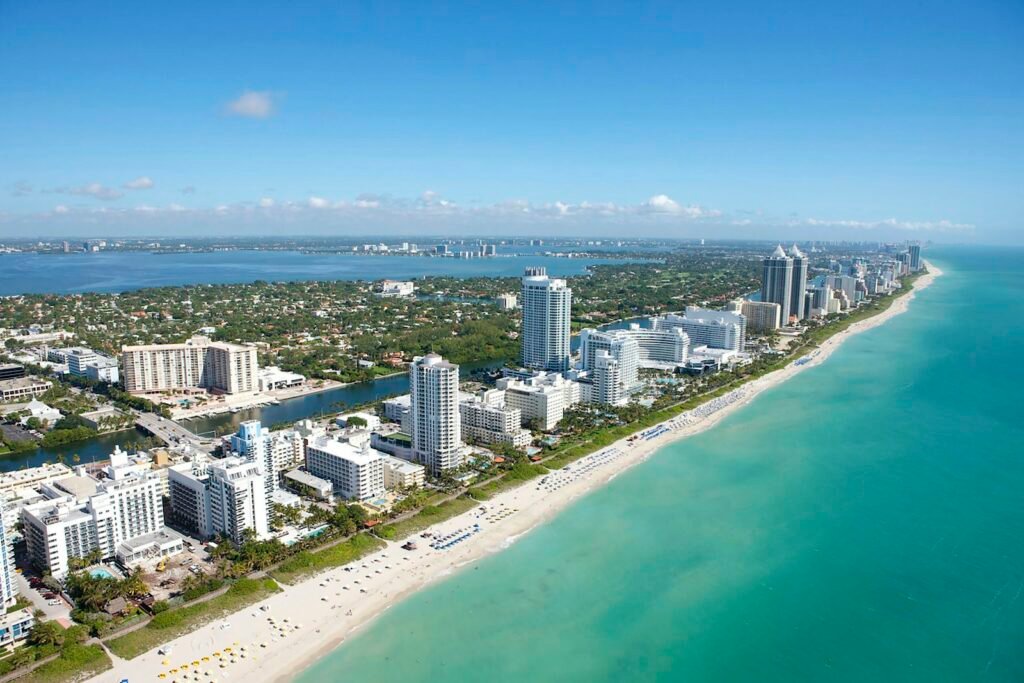
Condos in north Palm Beach County cluster along the ocean and the Intracoastal Waterway. Singer Island has high-rise oceanfront towers, Juno Beach has condos on the ocean and the Intracoastal, and downtown West Palm Beach offers city condos near the waterfront, shops and the Brightline station.
- Singer Island: oceanfront high-rises and resort-style buildings between the Palm Beach Inlet and John D. MacArthur Beach State Park. Many buildings here are tall and on salt water, so the milestone and SIRS questions apply to most of them.
- Juno Beach: mostly condos along the ocean and the Intracoastal Waterway, with a quieter, small-town feel. Beachfront buildings follow sea turtle lighting rules during nesting season.
- West Palm Beach: downtown towers and mid-rise buildings near Clematis Street, the waterfront and the Brightline station, plus older garden-style condos farther out.
- Elsewhere: Jupiter, North Palm Beach and Palm Beach Gardens also have condos and townhomes, often in low-rise communities.
A building under three habitable stories is not subject to the milestone inspection or SIRS rules. Low-rise and garden-style condos can still have large repair needs, so read the budget and reserves either way.
What should be on your condo buyer checklist?
A Palm Beach County condo buyer checklist should cover the building’s milestone inspection and SIRS status, the budget and reserves, any approved or proposed special assessments, the insurance, the rules, and the financing. Most of this comes from the documents the seller must provide, and you have 7 days to review them after you receive them.
| Item | Where to find it | What you want to see |
|---|---|---|
| Milestone inspection | Inspection summary from the seller; association website | Done on time; any Phase Two repairs planned, started and funded |
| SIRS | Most recent SIRS from the seller | Completed; budget funds the SIRS amounts |
| Budget and financials | Annual budget and financial statement | Fees you can afford; no large deficits |
| Special assessments | Minutes, estoppel certificate | Amount, schedule and who pays under your contract |
| Loans or credit lines | Financial statement, minutes | Balance, term and cost per unit |
| Insurance | Master policy summary | Adequate coverage; know what your HO-6 must cover |
| Flood risk | FEMA and county flood maps | Zone known; flood coverage understood |
| Rules | Declaration, bylaws, rules | Rental, pet, parking and renovation rules fit your plans |
| Financing | Lender’s condo review; FHA list | Building approved for your loan type |
| Unit condition | Home inspection | No surprises inside the unit, windows or AC |
Flood and insurance questions apply to condos too. Our guide to flood zones and flood insurance explains how to check a building’s zone. Our post on 4-point and wind mitigation inspections covers the insurance inspections that mostly apply to houses and townhomes but can come up with some condo policies. For the bigger picture, start with our buying guide.
Frequently asked questions
Do all Florida condos need a milestone inspection?
No. Florida’s milestone inspection applies to condo and co-op buildings that are three habitable stories or more. It is due by December 31 of the year the building turns 30, then every 10 years. A local building department can require it at 25 years based on conditions such as being near salt water.
How long do I have to cancel a condo purchase in Florida?
On a resale, a Florida condo buyer can cancel within 7 days, not counting Saturdays, Sundays and legal holidays, after signing the contract and receiving the required condo documents. The right ends at closing, and any waiver of it has no effect under section 718.503 of the Florida Statutes.
Can a condo association still waive reserves in Florida?
Not for structural items. For budgets adopted on or after December 31, 2024, owners cannot vote to waive or reduce reserves for items in the structural integrity reserve study. Through 2028, a board can pause those contributions for up to two budgets to pay for milestone repairs, with a majority owner vote.
Are older condo buildings a bad buy now?
Not necessarily. An older building that has finished its milestone inspection, completed repairs and funded its reserves can be a solid buy, often at a lower price than a newer building. The risk is a building with repairs still ahead and no clear plan to pay for them. The documents tell you which kind it is.
Why is it hard to get an FHA loan on a condo?
FHA loans require the whole condo building to be FHA-approved, not just the buyer. MIAMI REALTORS reported in August 2026 that only 21 of 2,397 South Florida condo buildings had that approval. Buyers who need low down payments should check a building’s FHA status before writing an offer.
Sources
- Florida Statutes, section 553.899: Mandatory structural inspections for condominium and cooperative buildings
- Florida Statutes, section 718.112: Bylaws (structural integrity reserve study and reserves)
- Florida Statutes, section 718.503: Disclosure prior to sale
- Florida Statutes, section 718.111: The association (official records and websites)
- Florida Senate: CS/CS/HB 913 (2025), Condominium and Cooperative Associations
- Florida Senate: bill summary for HB 913 (2025)
- Becker: Review of new condominium laws for 2025
- MIAMI REALTORS: Palm Beach County real estate market report, July 2026
- WLRN via WUSF: Condo sales fall again in 2025 (January 20, 2026)
- Florida Realtors: State of Condos, economists’ report (August 2025)
- Florida Condo & HOA Law Blog: website requirement for 25 or more units
This article is general information, not legal, tax or insurance advice. Rules, rates and deadlines change, so confirm the details with the official source, a Florida real estate attorney, your title company, your insurance agent or a tax professional before you rely on them.

With over 10 years of experience as a successful real estate agent, I have proudly helped hundreds of happy buyers and sellers achieve their real estate goals. I’m passionate about helping clients find their dream homes, sell their properties with confidence, and navigate every step of the process with ease. My commitment to personalized service, strong relationships, and exceptional results makes every real estate journey a rewarding experience.
REALTOR® with Continental Properties, Inc. in North Palm Beach. Florida license #3346934.